
Global Economy
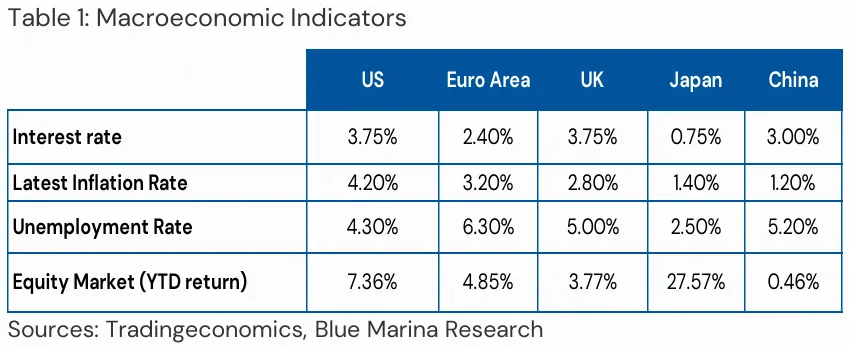
According to the Bureau of Labor Statistics (BLS), the United States’ (US) headline inflation rose by 40bps to 4.2% y/y in May (April: 3.8% y/y), broadly in line with expectations and marking the highest level since April 2023 (+4.9% y/y).
The acceleration was primarily driven by an increase in energy inflation (+23.5% y/y vs April: +17.9% y/y), reflecting a surge in gasoline (+40.5% y/y vs April: +28.4% y/y) and fuel oil (58.9% y/y vs April: 54.3% y/y) prices. Food inflation (+3.1% y/y vs April: +3.2% y/y) eased on the back of decreased prices of food at home (+2.7% y/y vs April: +2.9% y/y) and food away from home (+3.5% y/y vs April: +3.6% y/y), while core inflation (+2.9% y/y vs April: 2.8% y/y) accelerated, due to shelter (+3.4% y/y vs April: +3.3% y/y) costs. Meanwhile, on a month-on-month basis, headline inflation eased by 0.5% m/m (April: +0.6% m/m). Looking ahead, elevated oil prices and ongoing geopolitical tensions in the Middle East may continue to keep energy costs high, adding upward pressure to headline inflation in the coming months. Nevertheless, the Fed is expected to keep rates unchanged at its next meeting while awaiting clearer evidence of sustained disinflation. This aligns with market pricing, as the CME FedWatch tool indicates a 96.2% probability that the Fed will hold rates at the 17 June meeting.
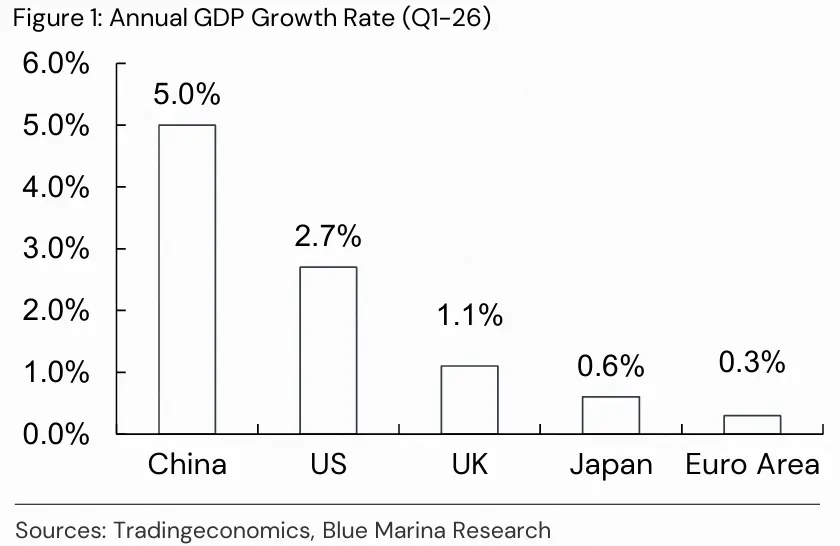
The Governing Council of the European Central Bank (ECB) voted to raise their key interest rates at the June monetary policy meeting, marking the first rate increase since September 2023. Accordingly, the Committee increased the deposit facility rate, main refinancing operations rate, and marginal lending facility rate by 25bps apiece to 2.25%, 2.40%, and 2.65%, respectively (previously: 2.00%, 2.15%, and 2.40%). This decision underscores the ECB’s commitment to ensuring that inflation returns sustainably to its 2.0% medium-term target amid renewed inflationary pressures stemming from rising energy costs and heightened geopolitical tensions in the Middle East, particularly the conflict involving Iran and disruptions to oil shipments through the Strait of Hormuz. The rate hike was further justified by the Committee’s upward revision to its inflation forecasts, with headline inflation now projected at 3.0% in 2026 and 2.3% in 2027 (previously: 2.6% and 2.0%, respectively). Similarly, core inflation forecasts were revised upward to 2.5% for both 2026 and 2027 (previously: 2.3% and 2.2%, respectively), suggesting that underlying price pressures may remain elevated for longer than previously anticipated. Meanwhile, the ECB slightly downgraded its growth forecasts, with Eurozone GDP expected to expand by 0.8% in 2026 and 1.2% in 2027 (previously: 0.9% and 1.3%, respectively). Overall, the Committee reiterated that future policy decisions will remain data-dependent and determined on a meeting-by-meeting basis. While the latest rate hike signals increased concern over the inflation outlook, we expect the Committee to proceed cautiously given the softer growth backdrop and uncertainty surrounding the persistence of energy-related inflationary pressures. Consequently, we anticipate the ECB will keep rates unchanged at its next policy meeting while monitoring inflation developments, energy markets and broader economic conditions.
Global equity markets traded lower this week as investor sentiment weakened amid escalating geopolitical tensions in the Middle East, persistent inflation concerns, and uncertainty surrounding the interest rate outlook. Risk appetite softened following renewed tensions between the US and Iran, which pushed oil prices higher and reignited concerns over global inflation and the potential for interest rates to remain elevated for longer. Investors also digested the latest US inflation data and the ECB’s rate decision, further weighing on market sentiment.
United States: US equities are set to close the week lower (DJIA: -0.3%; S&P 500: -0.5%; Nasdaq: -0.8%), as investors adopted a cautious stance amid rising geopolitical risks, a stronger-than-expected US inflation print, and uncertainty over the timing of future Federal Reserve rate cuts. Losses were amplified by weakness in technology stocks, particularly semiconductor and AI related names.
Europe: European markets (STOXX Europe 600: -0.2%; FTSE 100: -0.6%) ended the week lower. Investor sentiment was pressured by rising oil prices following the escalation of Middle East tensions, while the ECB’s latest rate hike reinforced expectations of a prolonged higher interest rate environment.
Asia: Asian equities delivered mixed performance during the week. China’s market declined (SSE: -1.0%) as weak domestic demand and ongoing property sector challenges continued to weigh on sentiment. In contrast, Japan’s Nikkei 225 gained 0.7%, supported by strength in select large-cap and financial stocks despite the broader risk-off environment.
Emerging Markets: (MSCI EM: -2.9%), recorded broad losses, weighed down by weaker global risk sentiment, rising geopolitical tensions, and concerns that higher global interest rates could persist for longer.
Important Information: Disclaimer
Blue Marina Securities Limited (“Blue Marina”) reports and its attendant recommendations are prepared based on publicly available information and are meant for general information purposes only and it may not be reproduced or distributed to any other person. All reasonable care has been taken to ensure that the information contained herein is not misleading or untrue at the time of publication; Blue Marina Securities Limited can neither guarantee its accuracy nor completeness as they are an expression of our analysts’ views and opinions.
Blue Marina Securities Limited and any of its associated or subsidiary companies or the employees thereof cannot be held responsible for any loss suffered by relying on the said information as this information as earlier stated, is based on publicly available information, analysts’ estimates and opinions, and is meant for general information purposes and should not be construed as an offer to buy or sell or a solicitation of an offer to buy or sell securities or any financial instruments. The value of any investment is subject to fluctuations, i.e., may fall and rise. Past performance is no guide to the future. The rate of exchange between currencies may cause the value of investment to increase or diminish. Hence investors may not get back the full value of their original investment.
Blue Marina Securities Limited is registered and regulated by the Securities and Exchange Commission, Nigeria. Registered office: 10 Keffi street, Off Awolowo Road, Ikoyi, Lagos, Nigeria.